Best Books for Canadian Passive Investors: 8 Books in Reading Order, from Conviction to Canadian Implementation (2026)
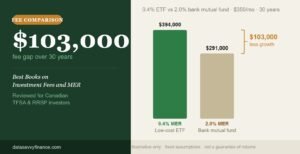
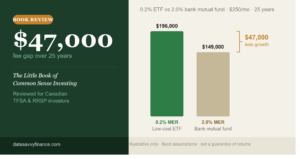
Most investing books will make you a worse investor. That is not a provocation. The investing book industry is built around activity, and a passive investor’s entire edge comes from doing less of it. This list is eight books, in a specific order, each chosen for one reason. Some build the conviction to hold through a 30% crash without selling. Some explain exactly how to build a low-cost ETF portfolio in Canada, using TFSA and RRSP mechanics, Canadian ETF tickers, and Canadian MER norms. One is specifically about fees, because understanding what a 2% Canadian mutual fund MER costs over 25 years is the single most motivating piece of financial education I have found.
Educational Disclaimer: This article recommends books for educational purposes only. The books described represent the views and strategies of their respective authors and do not constitute financial, investment, or tax advice from DatasavvyFinance.com. Individual investing decisions depend on personal circumstances that this article cannot assess.
Best Books for Canadian Passive Investors: 8 Books in Reading Order, from Conviction to Canadian Implementation (2026)
Most investing books will make you a worse investor. That is not a provocation. The investing book industry is built around activity, and a passive investor’s entire edge comes from doing less of it, not more.
I have read a lot of finance books. More than I probably needed to. What I found is that the ones worth reading are a small fraction of what gets published, and they are useful for a specific reason. Some build the conviction to hold through a crash. Some explain the Canadian implementation, which is genuinely different from the US context in ways that matter. And one is specifically about fees, because understanding what a 2% Canadian mutual fund MER costs over 25 years is the most motivating piece of financial education I have come across.
This list is eight books, in a specific order, each chosen for one reason. Read them in sequence if you can. If you want the practical investing framework before the reading list, the simple 3-ETF portfolio guide on DatasavvyFinance.com gives you the structure first. The books will make more sense with that context in place.
Why Most Investing Books Fail (and Why These Eight Are Different)
There are two types of bad investing books. They fail in opposite directions.
The first type is too academic. Behavioural finance theory, regression tables, portfolio optimisation models. Intellectually interesting. Practically useless for someone who wants to know whether to put their TFSA contribution into a low-cost ETF or a balanced fund.
The second type is too tactical. Market timing signals, sector rotation strategies, stock screening frameworks. These books assume the reader can consistently outperform professional fund managers with decades of experience and billion-dollar research budgets. The evidence across decades of data says they cannot. Neither can the professionals, most of the time.
What a passive investor actually needs from a book is narrower. The philosophical conviction to stay invested when everything feels like it is falling apart. A practical understanding of how index funds and ETFs work in the Canadian context, including TFSA and RRSP mechanics, MER norms, and the specific landscape of Canadian ETFs. And an honest account of why the simple strategy outperforms the complicated one over long periods.
Every book on this list serves one of those three purposes. Nothing else made the cut.
The Foundation Books (Start Here)
These two establish the philosophical case for passive investing. Read them before anything else.
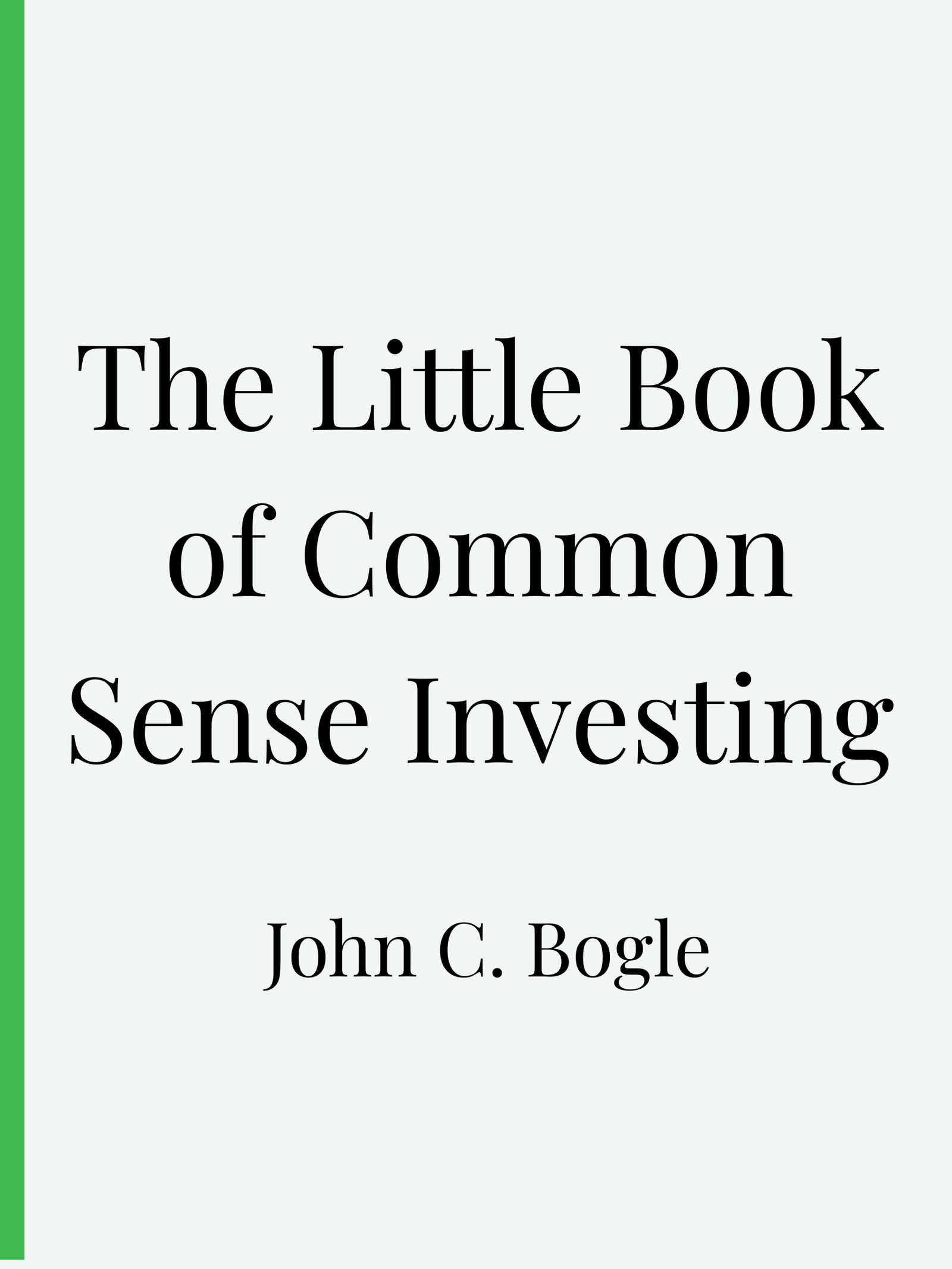
1. The Little Book of Common Sense Investing, John C. Bogle
View on Amazon Canada →The Little Book of Common Sense Investing, John C. Bogle
John Bogle founded Vanguard and invented the index fund as a retail product. This is the clearest argument he ever made for why owning the entire market at the lowest possible cost is the rational long-term strategy, and why almost everything else the financial industry sells works against that goal.
What you will actually learn: the mathematics of market returns minus costs, why active management fails most investors over a full market cycle, and why simplicity is a feature rather than a compromise. The MER argument Bogle makes applies directly to the Canadian mutual fund industry, which carries some of the highest average fees in the developed world. Reading this book and then looking at a Canadian bank fund’s MER produces a specific kind of clarity that is difficult to get any other way.
Under 220 pages. No jargon. Reads in a weekend. One of the most widely recommended books in the passive investing space, and for good reason.
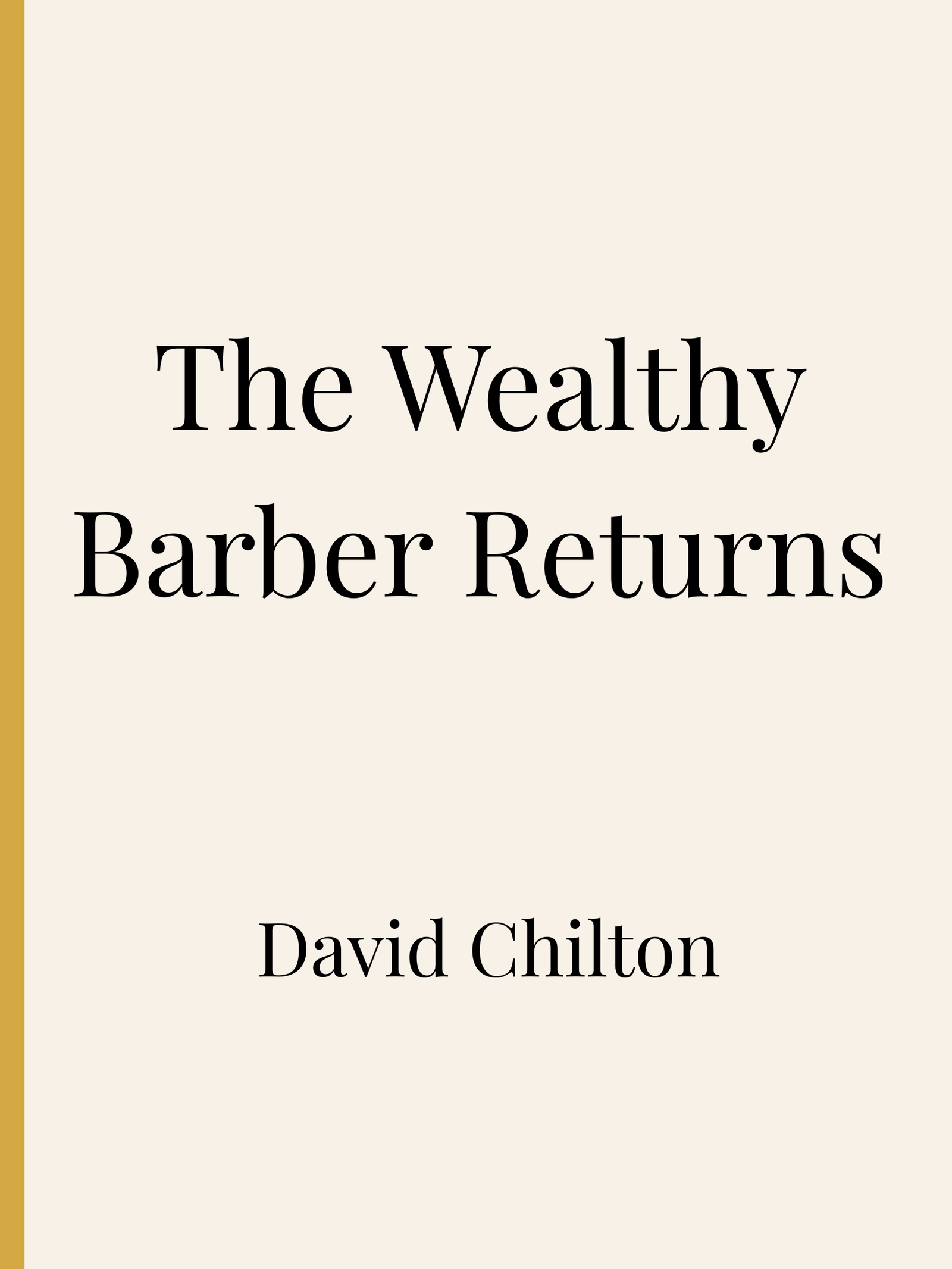
2. The Wealthy Barber Returns, David Chilton
View on Amazon Canada → Wealthy Barber Returns, Chilton
The most Canadian personal finance book ever written. Chilton does not translate US investing concepts for a Canadian audience. He writes entirely within the Canadian context, covering TFSA contribution room, RRSP mechanics, the Canadian banking system, and the specific psychology of Canadian savers and spenders.
What you will actually learn: saving habits that actually stick, the TFSA and RRSP decision framework explained in plain language, and a genuinely entertaining account of why most Canadians are making predictable, fixable money mistakes. The tone is conversational. It reads like a long series of honest conversations, not a textbook.
This is a useful starting point for investors who are earlier in their financial journey and find investment mechanics abstract. The Bogle book is more relevant once the basics are in place and you are ready to think about portfolio construction specifically.
The Behaviour Books (Why Most Investors Fail)
Understanding the strategy is the easy part. Sticking to it when markets drop 30% in three months is where most investors fail. These two books address that gap directly.
3. The Psychology of Money, Morgan Housel
View on Amazon Canada →The Psychology of Money, Housel
Nineteen short essays on the relationship between human behaviour and financial outcomes. This is the most readable book on the list and probably the most important one after Bogle.
What you will actually learn: why financial success has more to do with behaviour than intelligence, how to think about risk and uncertainty without pretending you can predict either, and why the investor who earns 7% annually and never sells during a crash will almost always outperform the investor who earns 10% but panics twice a decade. The chapter on wealth versus appearing wealthy is worth the price of the book on its own.
For passive investors specifically, this book builds the psychological resilience the strategy requires. Most people who abandon their ETF portfolio during a downturn do not do it because they stopped believing in index investing. They do it because watching their balance drop became emotionally unbearable. Housel explains why that happens and how to prepare for it before it does.
4. Thinking Fast and Slow, Daniel Kahneman
View on Amazon Canada →Thinking Fast and Slow, Kahneman
Heavier than the Housel book. More academic, more demanding, and more rewarding if you are willing to engage with it. Kahneman won the Nobel Prize in Economics for his work on cognitive biases, and this book is the most thorough account of how human thinking systematically fails in predictable ways.
What you will actually learn: the two-system model of thinking, why humans are consistently overconfident, why we overweight recent events, why loss aversion causes investors to sell precisely when they should be holding, and why we are terrible at evaluating probability. Every cognitive bias Kahneman documents maps directly to a way investors reliably destroy their own returns.
Read this after Housel, not before. The Housel book is more directly applicable and more enjoyable. Kahneman provides the scientific foundation for what Housel describes.
The Implementation Books (How to Actually Do This in Canada)
5. Millionaire Teacher, Andrew Hallam
View on Amazon Canada →Millionaire Teacher, Hallam
The most practically useful book on this list for a Canadian investor. Hallam is a Canadian teacher who built a million-dollar portfolio on a teacher’s salary entirely through low-cost index investing. He does not just make the philosophical argument. He gives specific, actionable recommendations that Canadian investors can implement without adapting them for a different market.
What you will actually learn: how to build a low-cost ETF portfolio in Canada, why the specific Canadian ETF landscape makes this accessible even for beginners, how to handle the emotional challenges of long-term investing, and how to tune out the financial noise that undermines most investors. Hallam writes from a first-person Canadian perspective throughout.
Read this after Bogle and Housel. Once you have the conviction, Hallam gives you the Canadian implementation.
6. Enough Bull, David Trahair
View on Amazon Canada → Enough Bull, Trahair Bull, Trahairn
The most explicitly Canadian book on fees in the entire list. Trahair worked in the Canadian accounting industry and writes with a clarity about what Canadian mutual fund fees actually cost that most industry participants prefer not to put in writing.
What you will actually learn: the specific dollar cost of typical Canadian bank fund fees over 10, 20, and 30 years, why the Canadian financial services industry is structured in a way that benefits the advisor and bank more than the investor, and how to evaluate your own investment costs honestly. The fee argument is not theoretical in this book. It is expressed in dollar terms on specific examples.
For the mathematical version of this argument applied to your own numbers, the investment growth calculator on DatasavvyFinance.com lets you model fee drag across different time horizons and starting balances.
7. Wealthing Like Rabbits, Robert R. Brown
View on Amazon Canada → Wealthing Like Rabbits, Brown
Written entirely for Canadians, using Canadian examples throughout. Brown covers budgeting, debt management, RRSP and TFSA strategy, and the basics of investing without requiring any translation from a US context.
If Millionaire Teacher is the intermediate Canadian investing book, Wealthing Like Rabbits is the beginner version. Read this first if you are earlier in your financial journey and the investing mechanics still feel abstract. It builds the financial foundation that makes the other books more actionable. Light, entertaining, and genuinely beginner-friendly, it reads nothing like a textbook.
The Advanced Book (Once the Foundation Is Solid)
8. A Random Walk Down Wall Street, Burton Malkiel
View on Amazon Canada → A Random Walk Down Wall Street, Malkiel
First published in 1973 and updated regularly since, this is the intellectual foundation the entire passive investing movement is built on. Bogle built Vanguard with Malkiel’s argument in mind. If The Little Book of Common Sense Investing is the summary, A Random Walk Down Wall Street is the full case.
What you will actually learn: the efficient market hypothesis explained accessibly, why technical and fundamental analysis consistently fail to beat the market over time, the history of market bubbles and crashes from tulip mania to the 2008 financial crisis, and a comprehensive practical guide to building index fund portfolios. The historical chapters alone are worth reading. Understanding that markets have survived everything they have faced so far is genuinely useful context when the next crash feels like the end of the world.
Check that you are buying the most recent edition. Malkiel updates it regularly and the newer editions include ETF-specific guidance that earlier printings predate.
Optional addition: The Little Book That Still Beats the Market by Joel Greenblatt is the one counterpoint worth considering. Greenblatt makes the most honest case for value investing available, and passive investors should understand the strongest argument against their strategy before fully committing to it. Most readers come away from it more convinced of passive investing, not less.
How to Read This List
Here is the order that makes the most sense for most Canadian investors.
Start with The Wealthy Barber Returns if the financial basics still feel shaky. Start with The Little Book of Common Sense Investing if you already understand the fundamentals and want to go straight to the investing philosophy.
Read The Psychology of Money second regardless of where you started. Read it before you have had a chance to make your first emotional investing mistake rather than after.
Follow with Millionaire Teacher for Canadian ETF implementation. Then Enough Bull, A Random Walk Down Wall Street, and Thinking Fast and Slow in any order depending on whether you are more motivated by the fee argument, the historical case, or the behavioural science.
Wealthing Like Rabbits fills in whenever the personal finance foundation needs strengthening. The Little Book That Still Beats the Market is optional. Read it last, if at all.
All eight books are available in both physical and digital editions. For books you will re-read, Bogle, Housel, and Millionaire Teacher are the ones most investors return to. Always check you are buying the most recent edition of A Random Walk Down Wall Street.
Conclusion
Eight books. One clear strategy. Zero market timing required.
The most valuable thing this reading list gives you is not knowledge. It is conviction. A passive investor who genuinely understands why they are doing what they are doing is far more likely to hold through a crash than one who is following a strategy they half-believe in. The books that matter most on this list are the ones that build that conviction, Bogle for the logic, Housel for the psychology, Hallam for the Canadian implementation.
Read them in order. Then put the books down and do the boring, powerful thing they all recommend. Open a low-cost account, buy a few ETFs, contribute regularly, and leave it alone.
For a comparison of platform options for Canadian self-directed investing, the Questrade vs Wealthsimple guide on DatasavvyFinance.com covers the structural differences between the two most commonly used platforms. For the fee math that Bogle and Trahair describe, the investment growth calculator lets you run the numbers with your own balance and time horizon.
Frequently Asked Questions
The Little Book of Common Sense Investing by John C. Bogle is one of the most widely recommended books in the passive investing space. It makes the clearest, most concise argument for low-cost index fund investing available. For Canadian-specific context, pair it with Millionaire Teacher by Andrew Hallam, which addresses the Canadian ETF landscape, TFSA and RRSP mechanics, and Canadian fund costs directly. Books are recommended for educational purposes only and do not constitute investment advice.
Yes. The Wealthy Barber Returns by David Chilton, Millionaire Teacher by Andrew Hallam, Wealthing Like Rabbits by Robert Brown, and Enough Bull by David Trahair are all written specifically for Canadian investors. They address Canadian registered accounts, Canadian tax treatment, and the specific cost structure of the Canadian mutual fund industry directly. The US-authored books on this list, Bogle, Housel, Malkiel, and Kahneman, are included because their core arguments apply universally, even if the specific implementation details differ.
Passive investing means buying and holding low-cost index funds or ETFs that track the entire market rather than attempting to pick individual stocks or time market movements. The goal is to capture market returns at the lowest possible cost, rather than trying to beat the market through active management. The academic and performance record consistently shows that most actively managed funds underperform their benchmark index over 10-plus year periods, primarily because of fee differences. This is a simplified explanation for educational purposes. Individual investment decisions depend on personal circumstances.
The primary reason is fees. Active funds charge significantly higher management expense ratios than passive index funds. Since market returns are finite, higher fees directly reduce investor returns. Over long periods, the compounding effect of fee drag means most active funds fail to outperform their benchmark index after costs. Canadian equity mutual funds at major banks commonly charge 1.5% to 2.5% annually. A comparable passive Canadian equity ETF typically charges 0.06% to 0.09%. That difference of 1.4 to 2.4 percentage points compounds significantly over 20 to 30 year holding periods. The investment growth calculator on DatasavvyFinance.com allows you to model this with your own numbers.
Most books on this list can be read in a weekend. The Psychology of Money and The Wealthy Barber Returns are the shortest, under four hours each. The Little Book of Common Sense Investing and Millionaire Teacher both read in a day. Thinking Fast and Slow and A Random Walk Down Wall Street are longer commitments, roughly six to ten hours each. Starting with the shorter, more accessible books builds momentum before tackling the denser material.
Both are pooled investment vehicles that hold a collection of securities. The primary differences are cost and management approach. Most Canadian bank mutual funds are actively managed, with a fund manager selecting which securities to hold, and carry management expense ratios between 1.5% and 2.5% annually. Most ETFs track a market index passively, meaning no active management decisions are made, and carry MERs between 0.06% and 0.25% for broad market exposure. ETFs also trade on stock exchanges like individual stocks, while mutual funds are priced once per day after market close. The books on this list explain these differences in detail, particularly Bogle, Hallam, and Trahair.