
Make fewer financial mistakes, not bolder bets.
Long-Term Investing Explained, From Investment Growth to ETF Asset Allocation & Fee Impact
DataSavvyFinance helps retail long-term investors make better financial decisions with clear data, transparent assumptions, and practical analysis. Learn how compound interest, management expense ratios (MER), and asset allocation decisions influence long-term portfolio growth.
Unclear financial decisions come from noisy signals.
You need a clearer way to decide.
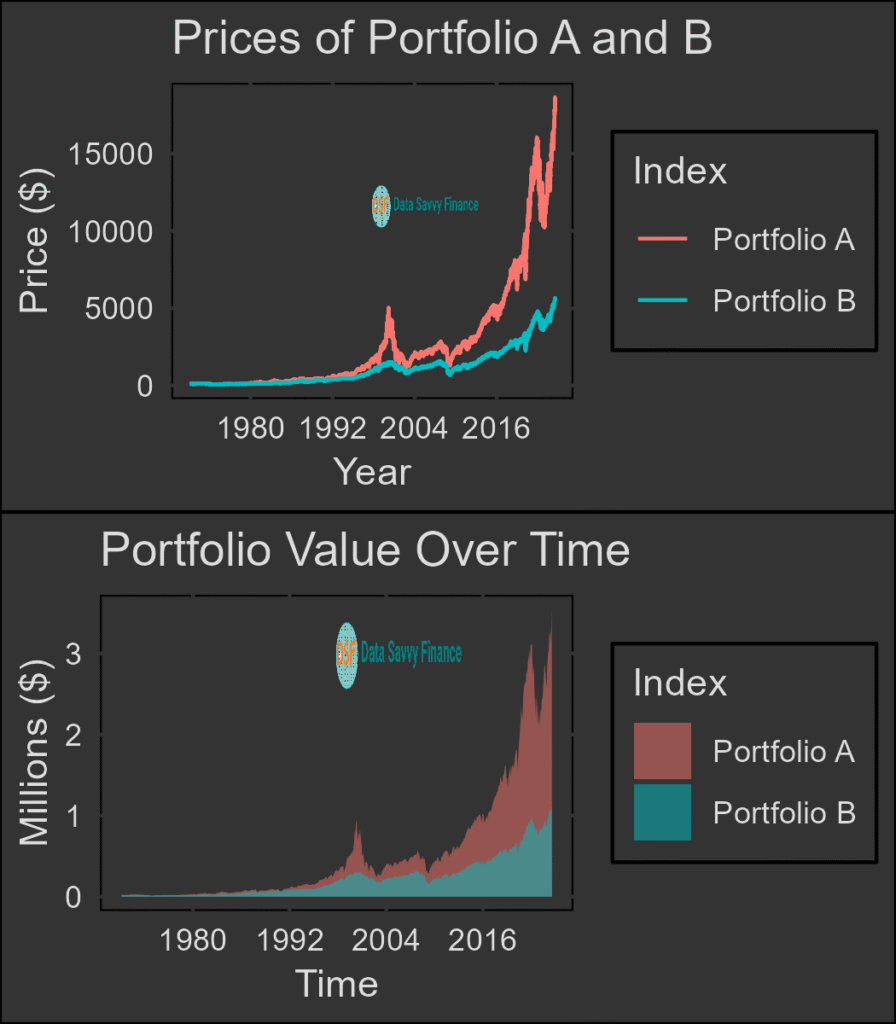
Why Most Investing Advice Creates Noise
Most investing content focuses on predictions, trends, and short-term market movements. That noise makes investing feel complicated and often leads to poor decisions.
What Actually Drives Long-Term Investment Growth
Most people don’t lose money because they choose the “wrong” stock. They lose money because they don’t understand the fundamentals:
- How investment fees quietly reduce long-term returns
- Why compound interest investment works over decades
- How a simple asset allocation strategy beats reactive decisions
DataSavvyFinance exists to explain these mechanics, clearly and honestly.
- No stock tips.
- No performance screenshots.
- No fear-based selling.
This is probably for you if…
- You’re overwhelmed by financial advice
- You’ve read a lot, yet investing still feels noisy or risky
- You don’t trust gurus, screenshots, or fear-based selling
- You want to understand why ETFs work for most people
- You care more about avoiding mistakes than chasing returns
- If that sounds familiar, you’re in the right place.



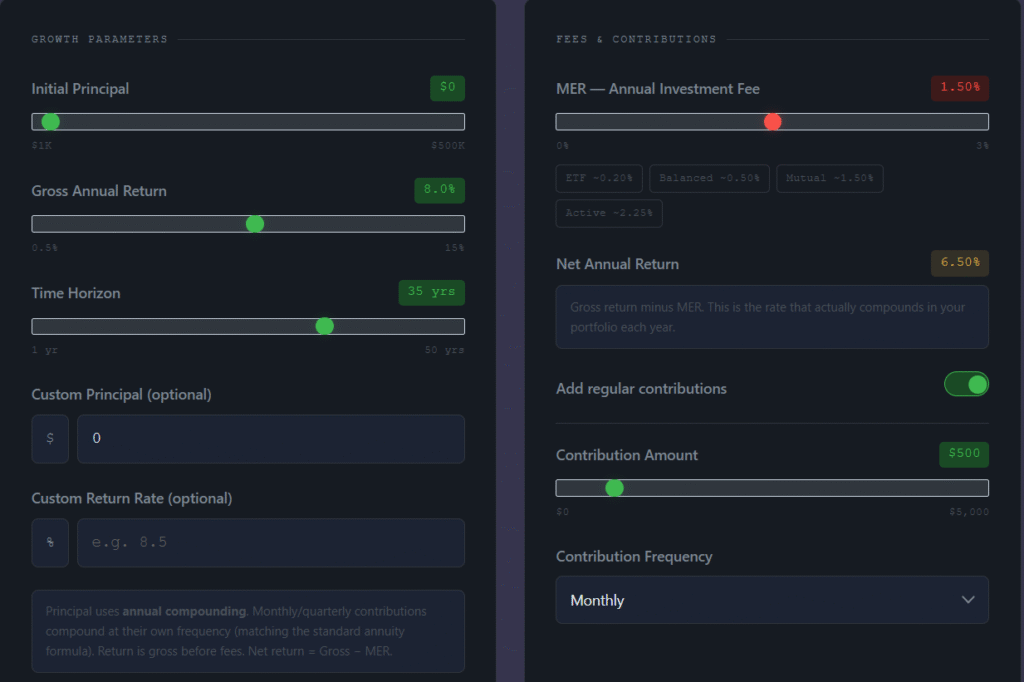
Investment Growth Calculator and Compound Interest
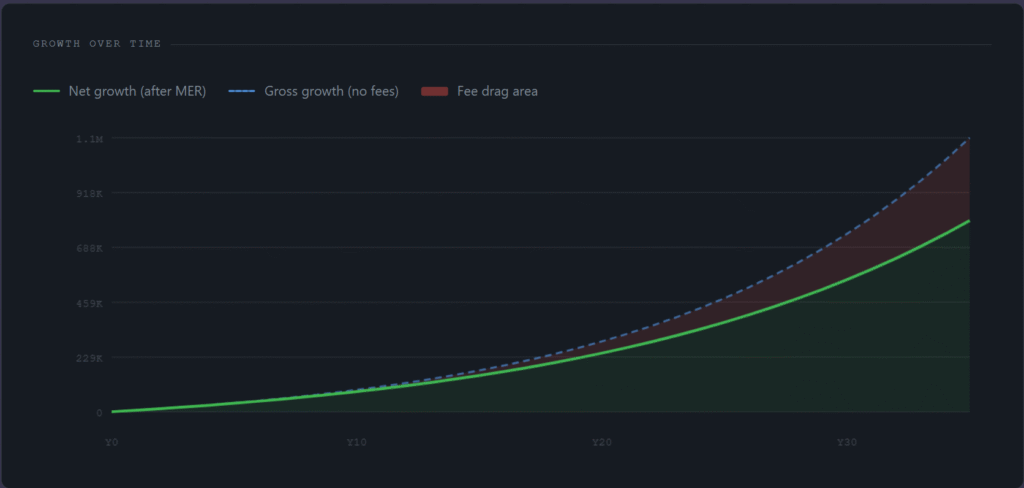
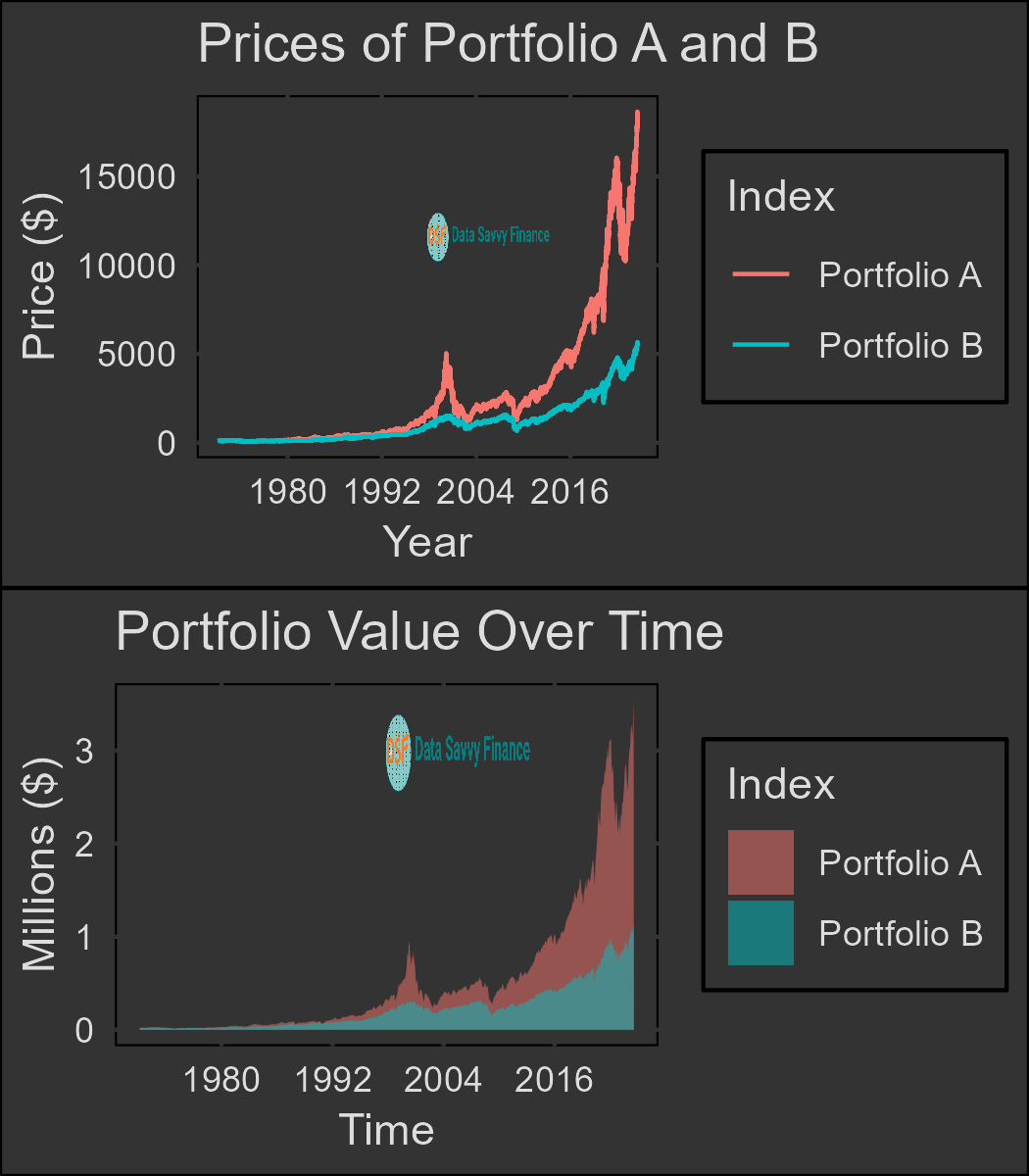
Understanding how investments grow over time is essential for long-term success. While markets fluctuate, compound interest remains one of the most powerful drivers of portfolio growth.
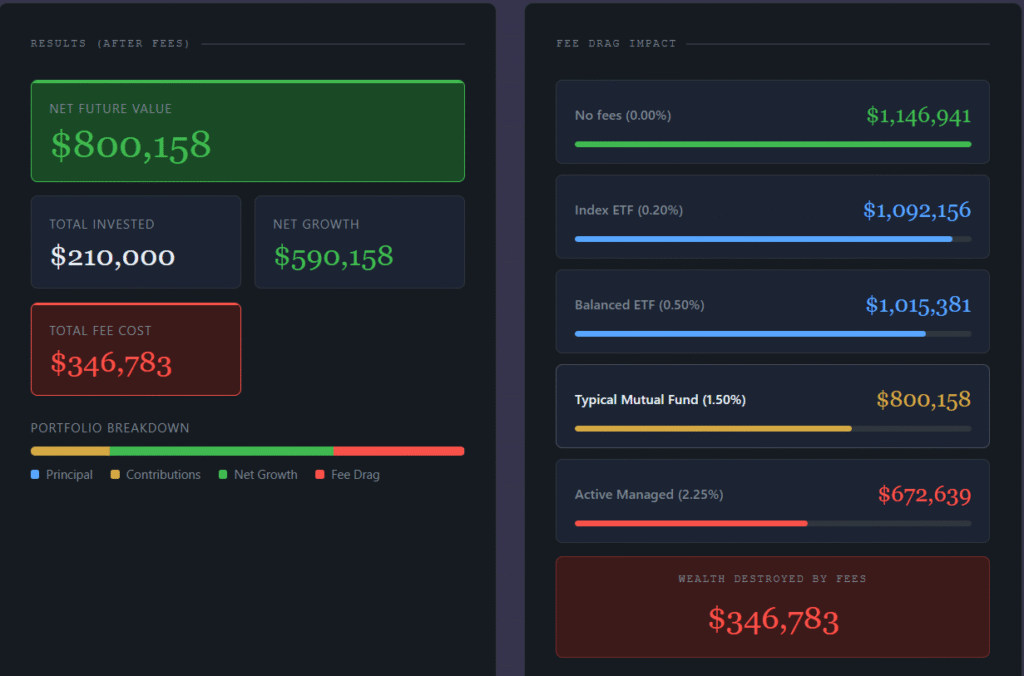
Our investment growth calculator and visuals demonstrate how initial capital, recurring contributions, expected returns, and fees interact over decades. Even small differences in annual returns can significantly impact final outcomes.
Explore how time in the market often matters more than timing the market.
How MER Affects Long-Term Investment Growth
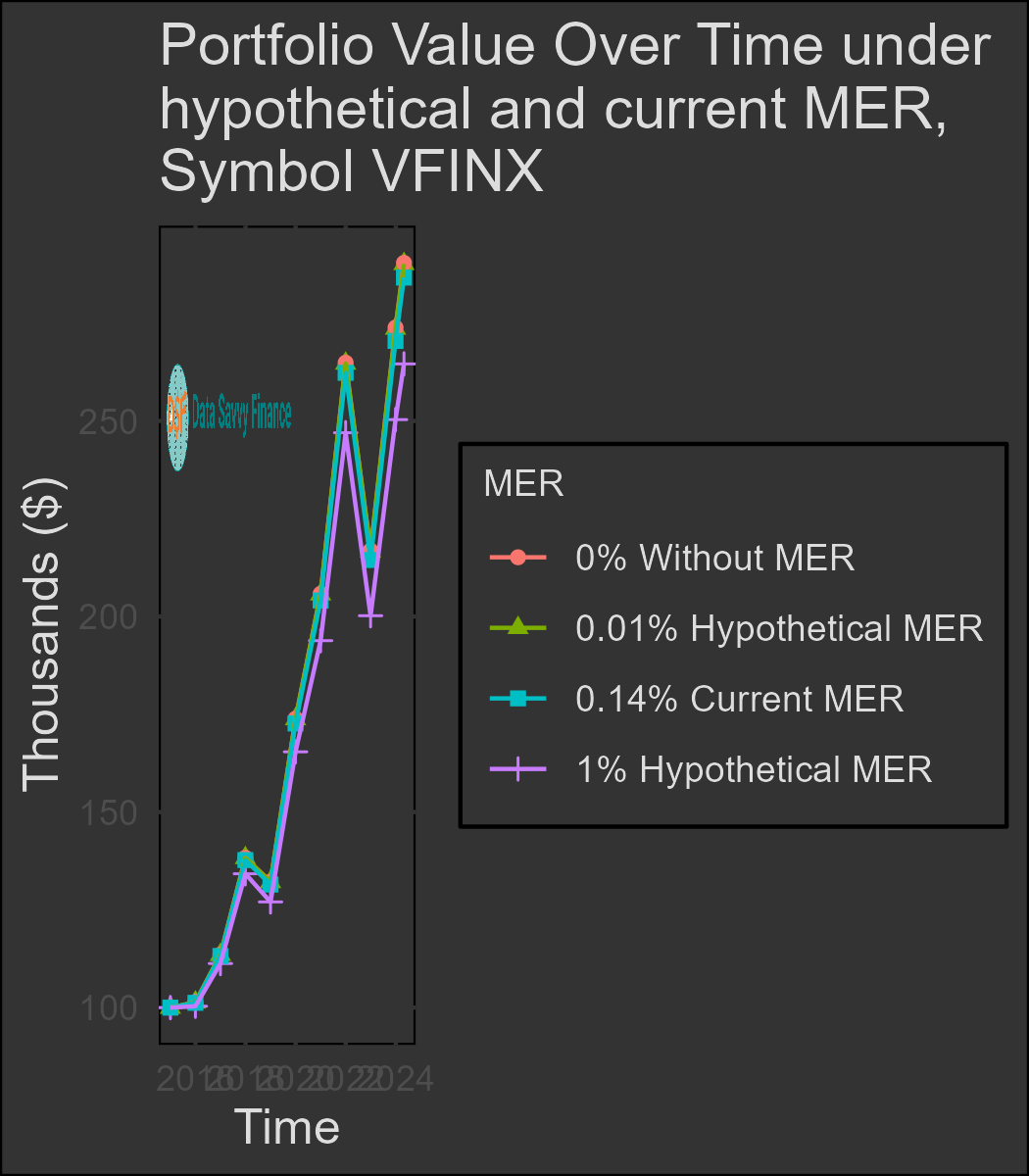
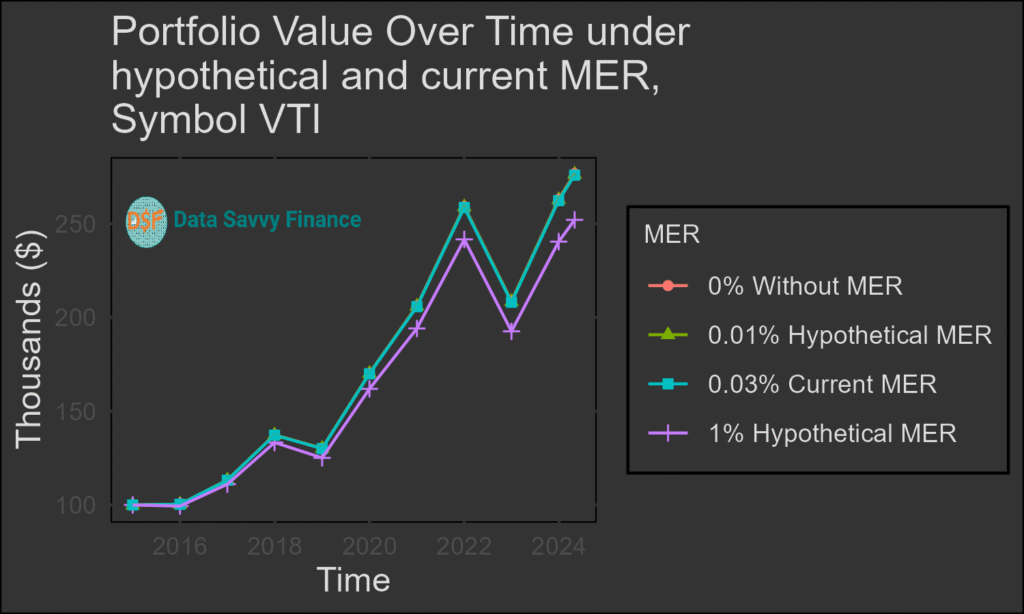
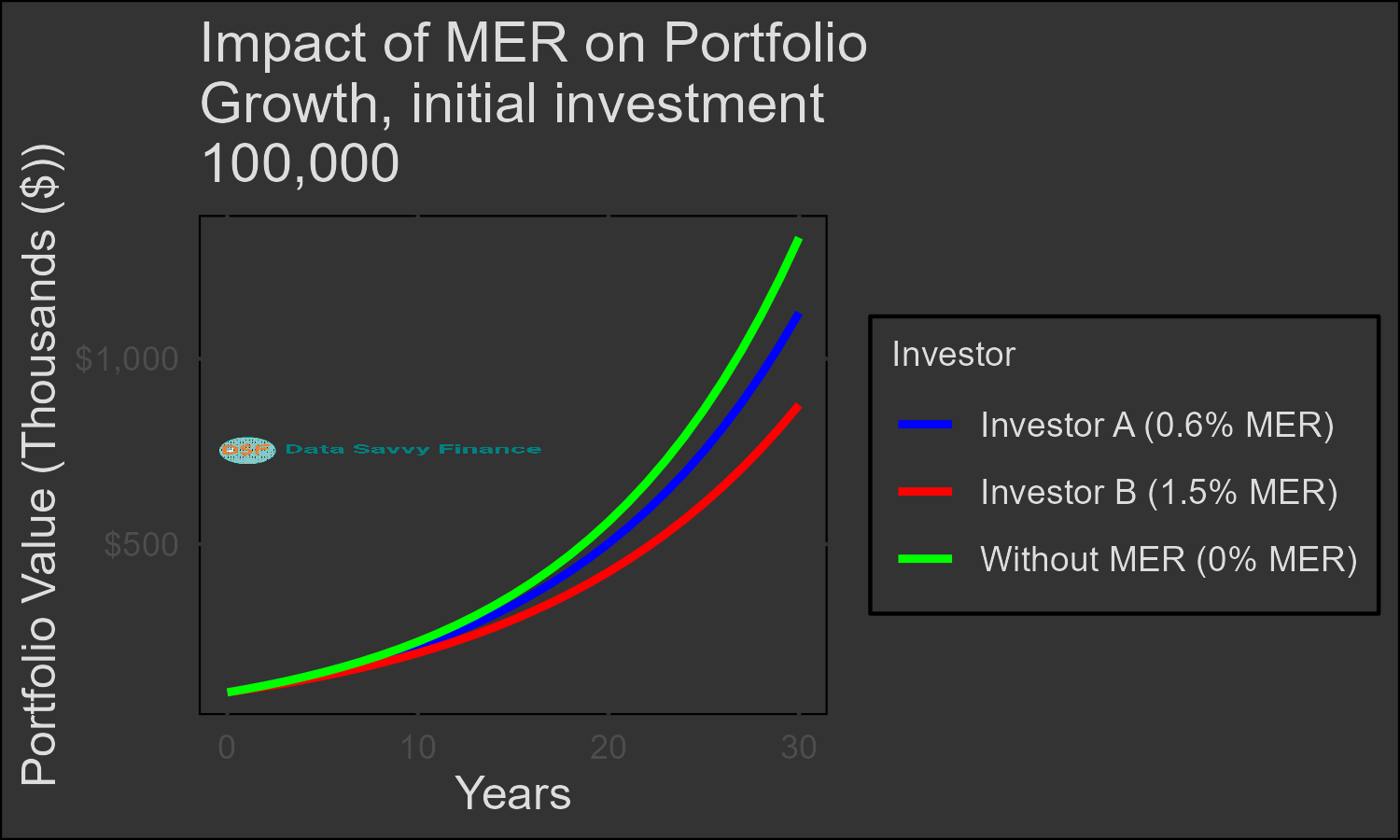
Management expense ratio (MER) represents the annual cost of holding an ETF or fund. While MER percentages may appear small, they reduce returns every year and compound over time.
A difference of 0.50% in annual fees can translate into tens of thousands in lost retirement savings over a multi-decade horizon.
Understanding what MER is in investing and choosing low-cost ETFs is one of the most reliable ways to improve long-term portfolio outcomes without increasing risk.
ETF Asset Allocation Strategy Made Simple
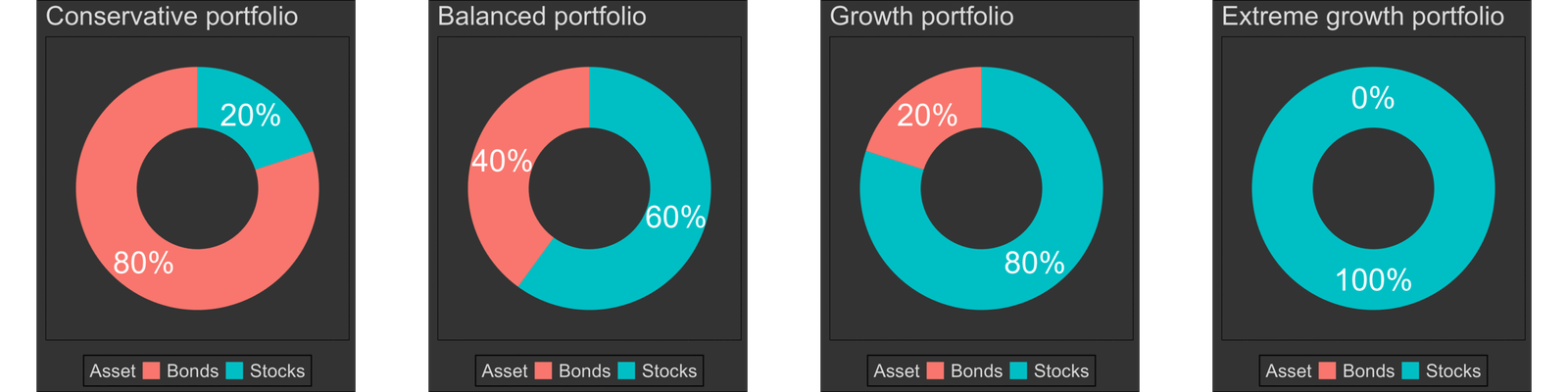
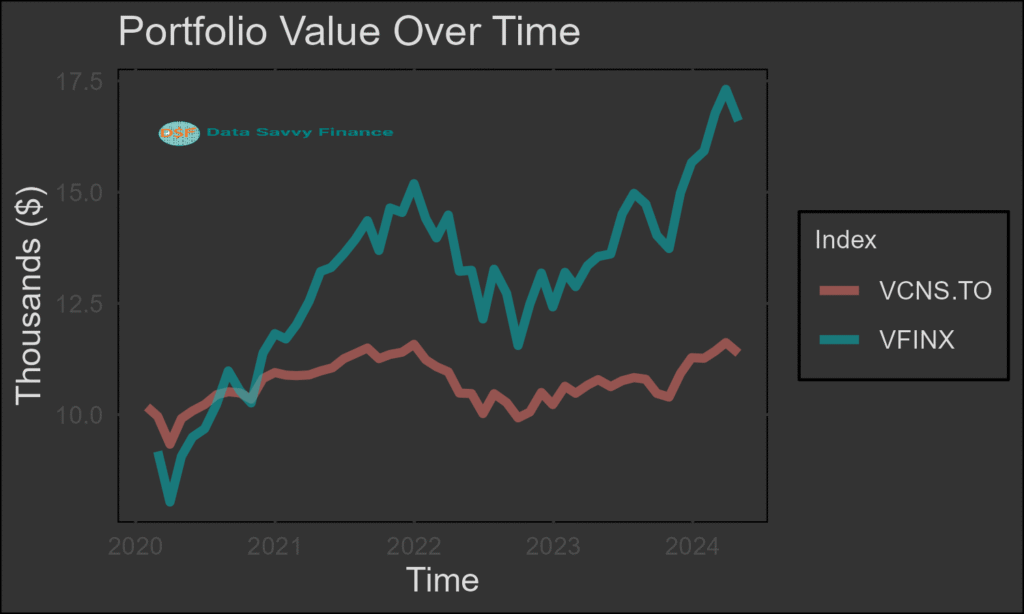
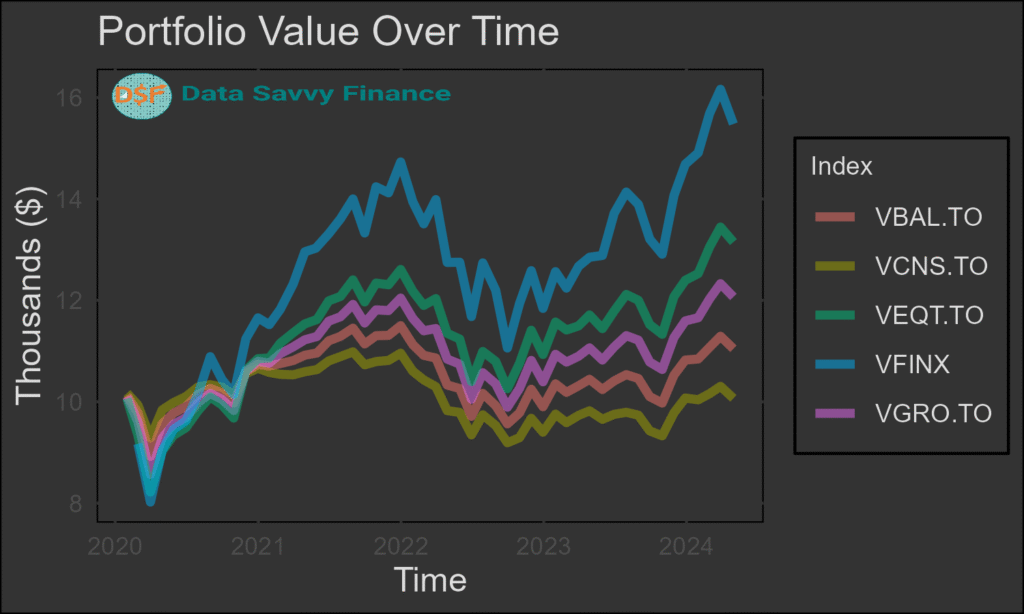
A strong ETF asset allocation strategy balances growth and stability. Most long-term portfolios combine stock ETFs for capital appreciation and bond ETFs for volatility reduction.
The right allocation depends on time horizon, risk tolerance, and retirement goals. A diversified mix, combined with periodic rebalancing, helps maintain discipline during market cycles.
Asset allocation is often more important than individual ETF selection.
Best ETF Allocation for Retirement Savings
There is no single best ETF allocation for retirement savings. The optimal mix depends on age, income stability, and comfort with market volatility.
Younger investors often prioritize growth with a higher percentage of stock ETFs, while those approaching retirement may increase bond exposure to reduce risk.
The most effective retirement strategies share three characteristics:
- Broad diversification
- Low management expense ratios
- Consistent rebalancing
- Long-term discipline matters more than short-term predictions.
Frequently Asked Questions (FAQs) About Long-Term Investing
Questions About The DataSavvyFinance Approach
This website explains long-term investing using data and plain language. It focuses on how fees, asset allocation strategy, and time affect long-term investment outcomes.
This website explains long-term investing using data and plain language. It focuses on how fees, asset allocation strategy, and time affect long-term investment outcomes.
This site is for anyone who wants clear explanations. It helps beginners learn the basics and experienced investors better understand topics like expense ratios, compound interest, and long-term ETF investing.
This site supports simple, low-cost, long-term investment strategies. These usually include diversified ETFs, a clear asset allocation strategy, and low fees.
No. This site does not provide stock picks or market predictions. It focuses on long-term investing principles like diversification, asset allocation, and cost control.
Yes. The site includes tools that show how investment growth, fees, and time interact. These tools are designed to support long-term investing decisions.
Questions About Investment Fees & ETF Asset Allocation
A good expense ratio for an ETF is typically below 0.25%, especially for broad market funds. Lower expense ratios reduce the drag on investment growth over time.
A good expense ratio for an ETF is typically below 0.25%, compared to typical mutual fund of 1%.
Investment fees reduce returns every year. Over long periods, even small fees significantly lower total investment growth because they reduce compound interest.
There is no single “best” ETF allocation for retirement savings. The right allocation depends on:
– Your age
– Time horizon
– Risk tolerance
– Income stability
That said, most long-term retirement portfolios use a mix of:
– Stock ETFs for growth
– Bond ETFs for stability
A common starting point:
– Growth-focused (younger investors):
80–100% stock ETFs, 0–20% bond ETFs
– Balanced (mid-career):
60–80% stock ETFs, 20–40% bond ETFs
– Conservative (near retirement):
40–60% stock ETFs, 40–60% bond ETFs
The key is not finding the perfect percentage.
It’s choosing an ETF asset allocation strategy you can maintain through market volatility.
Costs also matter. Lower management expense ratios (MERs) improve long-term retirement outcomes without increasing risk.
What You Will Learn on DataSavvyFinance
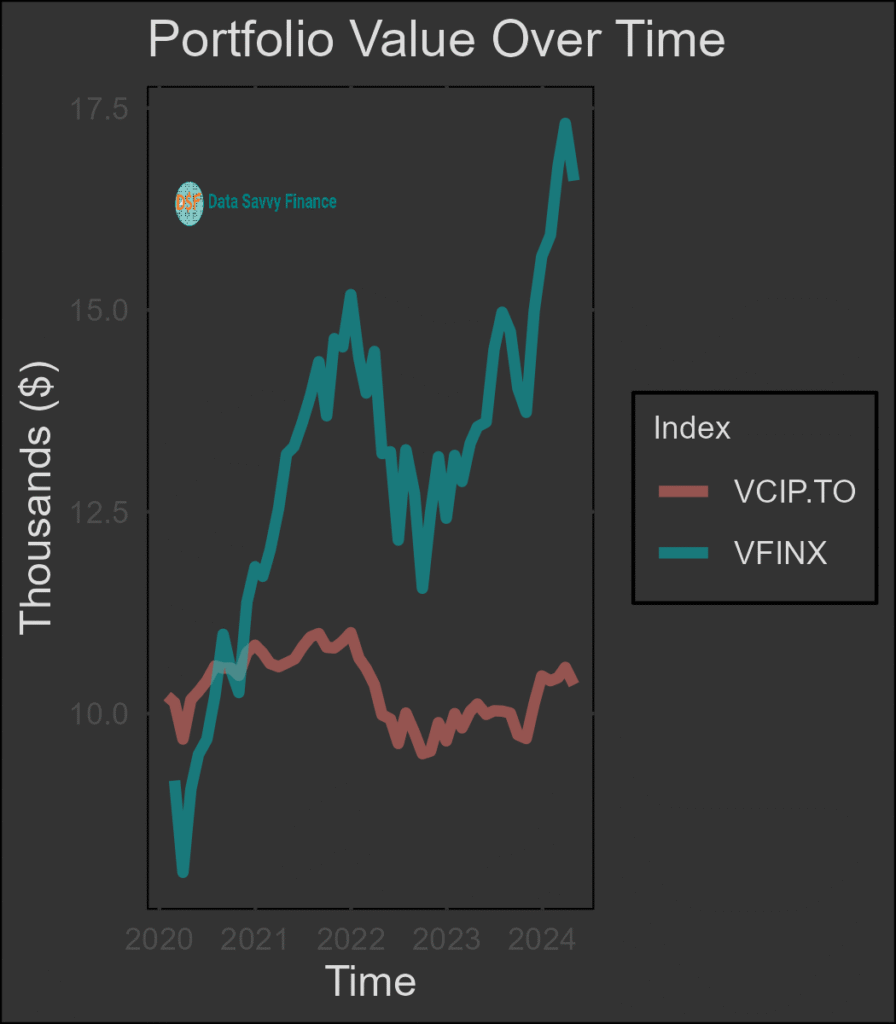
DataSavvyFinance focuses on long-term investing principles backed by data, not speculation. Our goal is to simplify ETF investing and retirement planning through clear explanations and visual analysis.

Understanding Investment Fees and Expense Ratios
Learn how management expense ratios (MER) and ETF costs affect long-term investment growth, and why low expense ratios matter for retirement portfolios.

Building Diversified ETF Asset Allocation Portfolios
Discover simple ETF portfolio allocations for beginners and balanced strategies designed for long-term investors.

Compound Interest and Long-Term Portfolio Growth
See how compound interest investment works over decades and why consistency outperforms short-term market timing.

Practical Retirement Planning with ETFs
Explore data-driven approaches to retirement savings, including risk management, rebalancing, and cost efficiency.
Start here
FEATURED CONTENT
Why trust this approach?
I work in data science, statistical modeling, and decision systems, across finance, agriculture, and large organizations.
That background taught me something important:
The best decisions are rarely the most complex ones.
They’re the clearest ones.
This site translates complex investment mechanics into real-world decisions, especially for people who want rigor without overwhelm.
Why trust this approach?
We work in data science, statistical modeling, and decision systems, across finance, agriculture, and various organizations.
That background taught me something important:
The best decisions are rarely the most complex ones.
They’re the clearest ones.
This site translates complex investment mechanics into real-world decisions, especially for people who want rigor without overwhelm.
Testimonials are a social proof, a powerful way to inspire trust.

Testimonials are a social proof, a powerful way to inspire trust.

Testimonials are a social proof, a powerful way to inspire trust.
Testimonials are a social proof, a powerful way to inspire trust.

If you want to invest more calmly, you’re in the right place.
This site is for people who want to understand long-term investing, master basic asset allocation strategy, and make calm, deliberate decisions about long-term ETFs and investment growth, not chase noise.