
Data-driven investing blog on portfolio construction, ETF strategy, and quantitative investing.
-
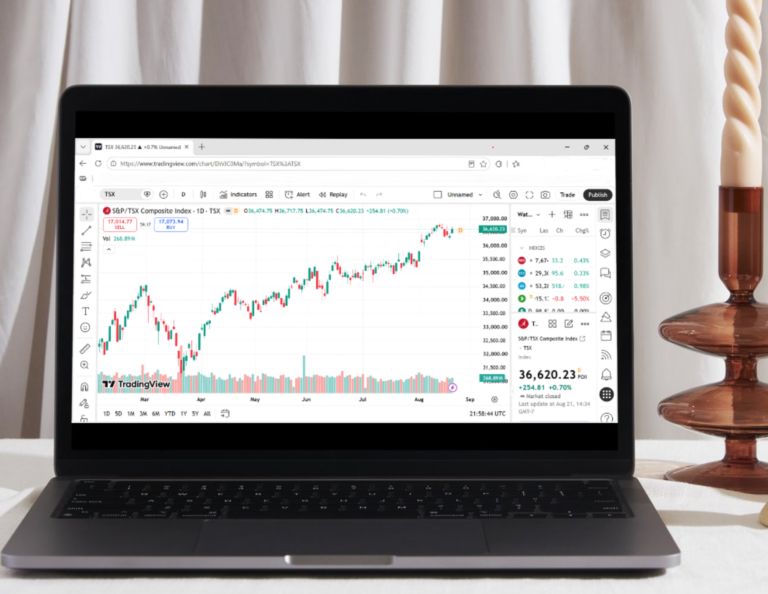
TradingView Review (Canada, 2026): What It Does Well, and What a Passive ETF Investor Can Skip
An honest TradingView review for Canadian ETF investors: what the free plan covers, what the paid tiers cost in CAD, and why most can stay free.
-
Empower Alternatives for Canadian Investors: How to Track Your True After-Fee Return in 2026
Empower doesn’t work in Canada. Here’s how Canadian ETF investors track their real after-fee return, with an honest look at Sharesight and the alternatives.
-
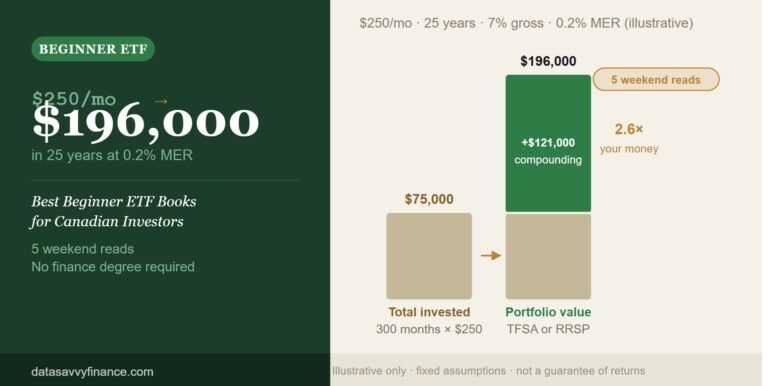
Best Beginner ETF Books for Canadian TFSA and RRSP Investors: 5 Reads Behind a $196,000 ETF Example
Most beginner investing content goes straight to philosophy, explaining why low-cost funds beat expensive ones, without ever covering how an ETF actually works. That gap is where most Canadian beginners get stuck. This list covers five books that fill it, starting with the mechanics of how an ETF holds hundreds of securities in a single ticker, through to the practical setup steps inside a Canadian TFSA or RRSP. The $196,000 figure is an illustrative example: $250 a month at 7% gross and a 0.2% MER over 25 years. No finance degree required.

Latest Articles Grid
- TradingView Review (Canada, 2026): What It Does Well, and What a Passive ETF Investor Can Skip
 An honest TradingView review for Canadian ETF investors: what the free plan covers, what the paid tiers cost in CAD, and why most can stay free.
 - Empower Alternatives for Canadian Investors: How to Track Your True After-Fee Return in 2026
 Empower doesn’t work in Canada. Here’s how Canadian ETF investors track their real after-fee return, with an honest look at Sharesight and the alternatives.
 - Best Beginner ETF Books for Canadian TFSA and RRSP Investors: 5 Reads Behind a $196,000 ETF Example
 Most beginner investing content goes straight to philosophy, explaining why low-cost funds beat expensive ones, without ever covering how an ETF actually works. That gap is where most Canadian beginners get stuck. This list covers five books that fill it, starting with the mechanics of how an ETF holds hundreds of securities in a single ticker, through to the practical setup steps inside a Canadian TFSA or RRSP. The $196,000 figure is an illustrative example: $250 a month at 7% gross and a 0.2% MER over 25 years. No finance degree required.
 - Best Books on Investment Fees and MER for Canadian TFSA and RRSP Investors: The $103,000 Fee Gap in 5 Reads
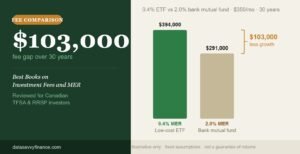 Most Canadian investors have never looked up the MER on their funds. That number, buried on page 1 of a Fund Facts document, quietly compounds against a portfolio every year. Five books explain why the gap between a 0.4% MER and a 2.0% MER amounts to roughly $103,000 over 30 years on the same monthly contributions. This reading list covers the foundational math, the Canadian-specific fee mechanics, and the psychology behind why most people never check. No advisor, no finance degree, and under 10 hours of reading to get through all five.
 - The Little Book of Common Sense Investing Review: The $47,000 Fee Lesson for Canadian TFSA and RRSP Investors
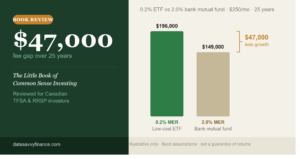 John Bogle spent 200 pages making one argument: costs matter more than almost anything else in investing, and most of the financial industry is built around keeping you from noticing that. For a Canadian TFSA or RRSP holder, that argument has a specific dollar figure attached. At 0.2% vs 2.0% MER, $250 a month over 25 years produces a portfolio gap of roughly $47,000. This review covers what the book gets right, which chapters are worth reading twice, and where Canadian investors need to translate the American examples into their own account context. No advisor required.